
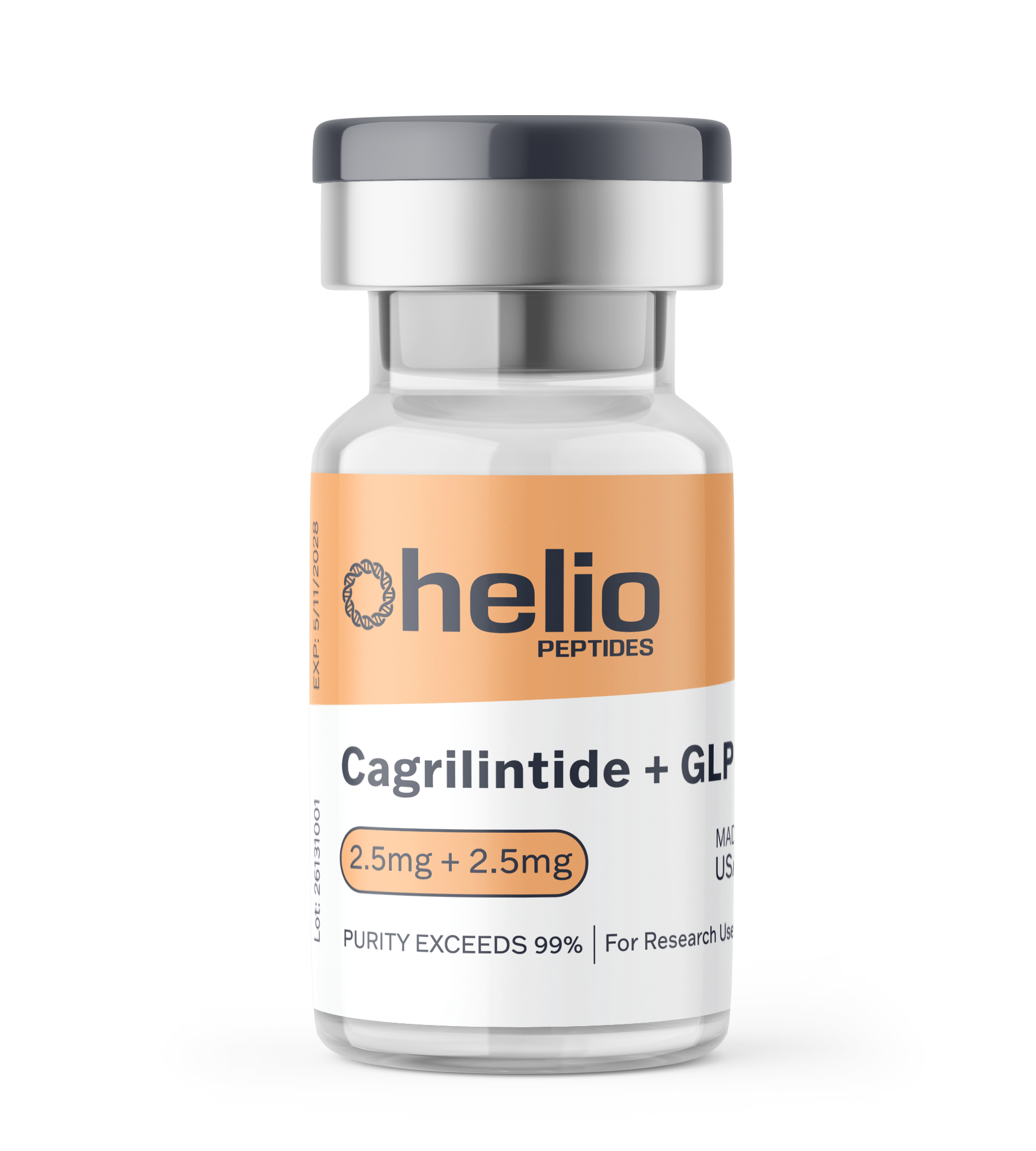
This research blend combines two distinct metabolic peptides in a single vial: cagrilintide, a synthetic long-acting amylin analog that agonizes amylin (AMY1-3) and calcitonin receptors, and GLP-1, the native incretin peptide that agonizes the glucagon-like peptide-1 receptor (GLP-1R). Because it is a physical mixture of two molecules, the blend has no single molecular formula, weight, or CAS number; each component retains its own identity, and the relevant specifications are listed per component below.
In preclinical research, the pairing of an amylin analog with a GLP-1 receptor agonist has been of interest for studying complementary signaling across the amylin and incretin axes in models of energy balance, food intake, and glucose handling. This co-formulation mirrors the scientific rationale behind combination amylin/GLP-1 research programs. This material is supplied strictly for Research Use Only and is not for human or animal use.
Research use only — not for human or animal consumption. Per-batch documentation is provided with the material.
Preclinical research on combined amylin-analog and GLP-1 receptor agonist administration has explored whether the two mechanisms produce complementary effects on satiety, food intake, and metabolic parameters relative to either agent alone. Findings are specific to the experimental models used and to the individual pharmacology of each component.
These observations derive from experimental and preclinical settings and are provided for scientific context only. No human efficacy, dosing, or therapeutic conclusions are implied by this listing.
The scientific rationale for pairing an amylin analog with a GLP-1 agonist grew out of parallel development of long-acting amylin analogs such as cagrilintide and the established GLP-1 incretin field, exemplified by combination programs studying amylin plus GLP-1 receptor agonism for metabolic research.
Cited literature refers to laboratory and preclinical research. Cagrilintide + GLP-1 Blend is supplied strictly for research use only and is not intended to diagnose, treat, cure, or prevent any disease.