
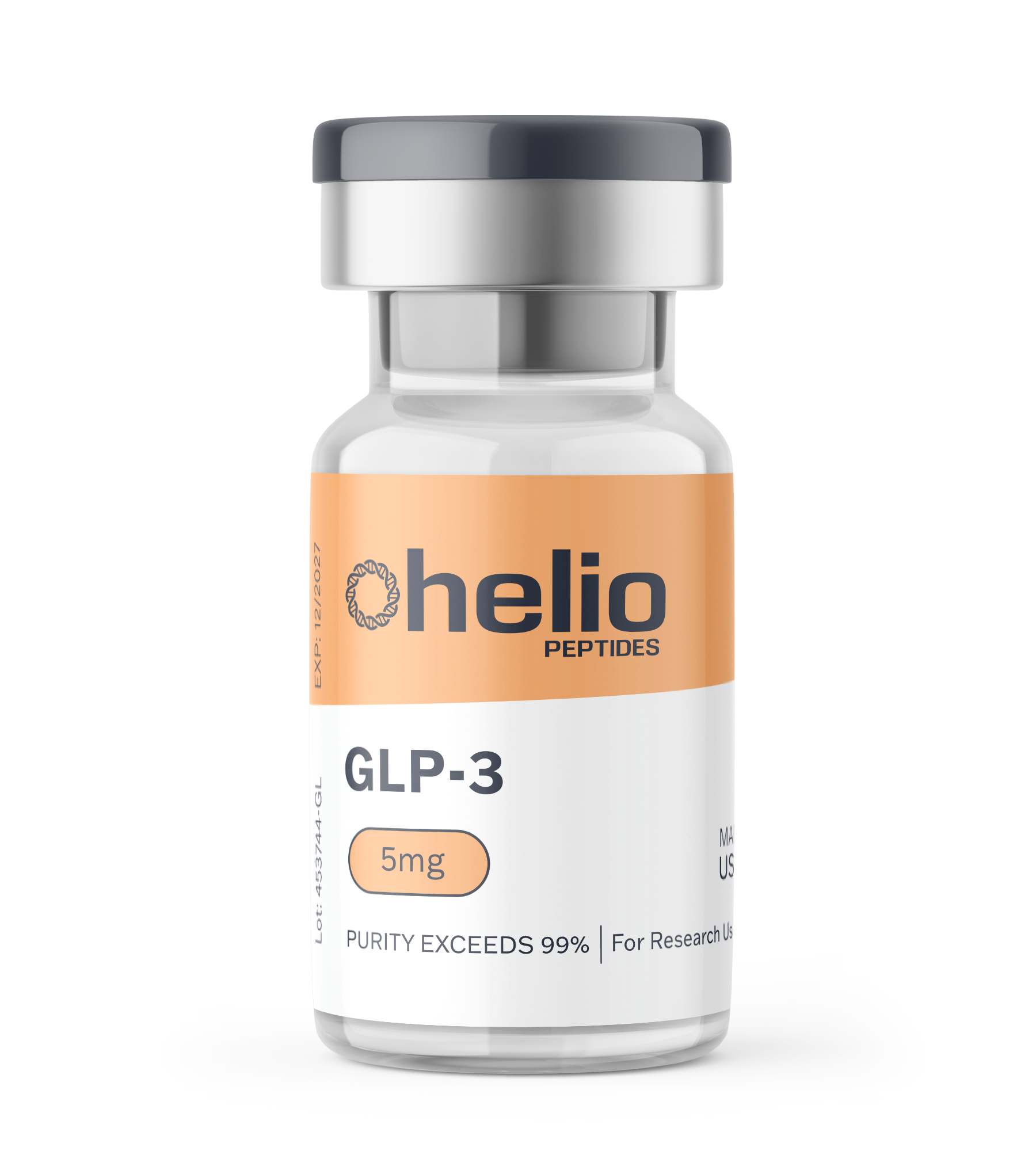
Retatrutide (development code LY3437943), marketed by the client as "GLP-3," is a synthetic single-molecule peptide of 39 amino acids engineered as a first-in-class triple incretin receptor agonist. In experimental characterization it activates three class B G-protein-coupled receptors simultaneously: the glucose-dependent insulinotropic polypeptide receptor (GIPR), the glucagon-like peptide-1 receptor (GLP-1R), and the glucagon receptor (GCGR). Its backbone incorporates aminoisobutyric acid (Aib) substitutions and fatty-acid acylation designed to confer protease resistance and extended circulating half-life.
In preclinical and in-vitro research, retatrutide has been used to study the pharmacology of combined incretin and glucagon-receptor engagement, including effects on energy metabolism, glucose handling, and adiposity in animal models. Its balanced triple-agonist profile distinguishes it from single (GLP-1R) and dual (GIP/GLP-1) agonists and has made it a subject of intense metabolic-research interest. This material is supplied strictly for Research Use Only.
Y-Aib-QGTFTSDYSILLDKKAQ-Aib-AFIEYLLEGGPSSGAPPPS (39 residues, dual fatty-acid acylated)
Research use only — not for human or animal consumption. Per-batch documentation is provided with the material.
Published preclinical and early-phase research characterizes retatrutide as a balanced agonist across GIPR, GLP-1R, and GCGR, with in-vitro potency data reported for each receptor. In animal models it has been associated with changes in body weight, food intake, and glucose parameters attributed to its combined incretin and glucagon-receptor activity.
These observations derive from experimental, preclinical, and early clinical-pharmacology settings and are provided for scientific context only. No human efficacy, dosing, or therapeutic conclusions are implied by this listing.
Retatrutide (LY3437943) was developed by Eli Lilly as a triple GIP/GLP-1/glucagon receptor agonist, building on the incretin biology established by earlier GLP-1 and dual GIP/GLP-1 agonists. Coskun and colleagues published its discovery and pharmacology, and it subsequently advanced through clinical evaluation as an investigational metabolic agent.
View compound profile on NIH PubChem →
Cited literature refers to laboratory and preclinical research. GLP-3 (Retatrutide) is supplied strictly for research use only and is not intended to diagnose, treat, cure, or prevent any disease.