
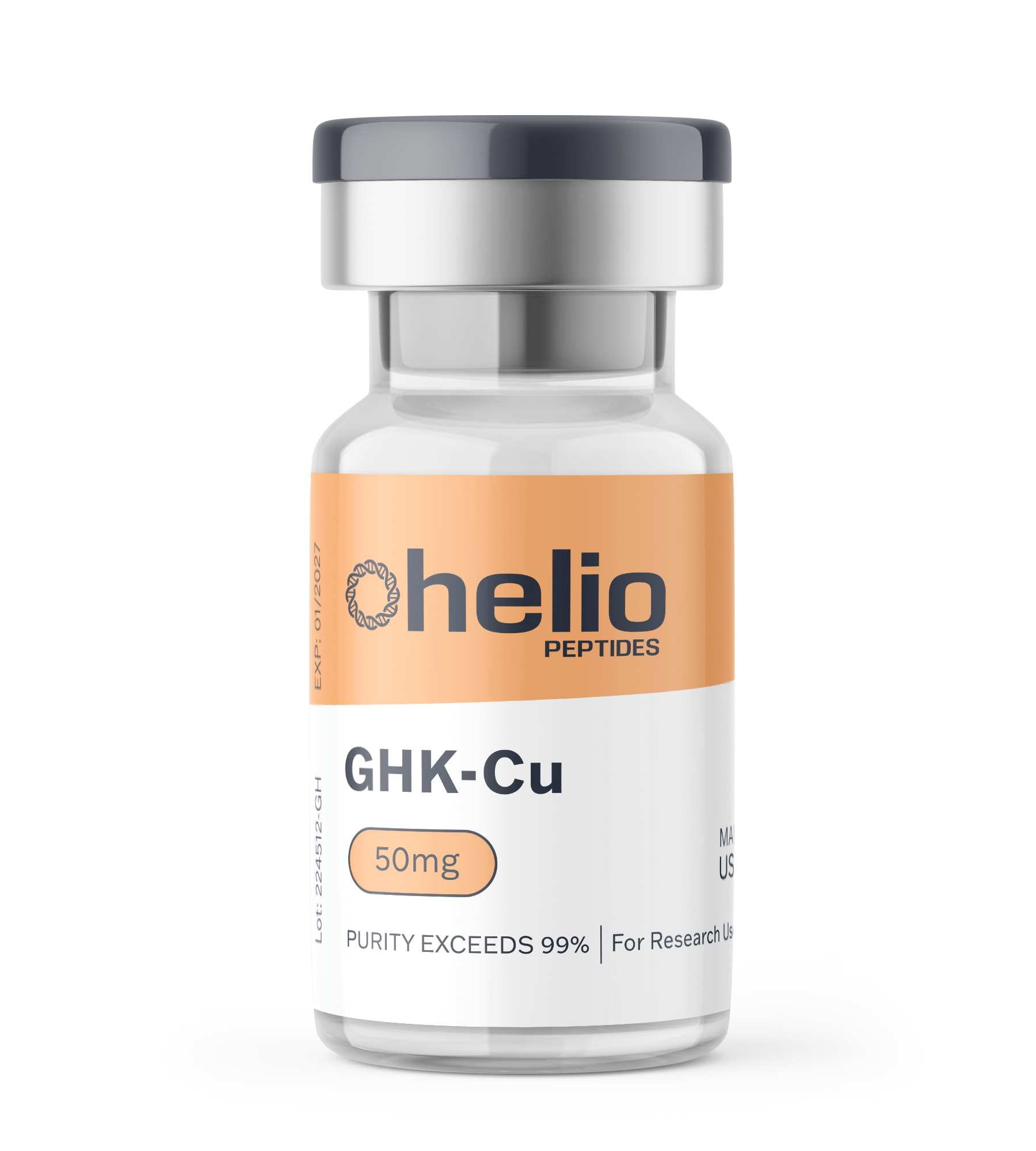
GHK-Cu, also designated Copper Tripeptide-1, is a copper(II)-chelated complex of the naturally occurring tripeptide glycyl-L-histidyl-L-lysine (Gly-His-Lys, GHK). The GHK sequence was first isolated from human plasma, and its high affinity for divalent copper ions gives rise to the blue-tinted 1:1 complex catalogued in PubChem under CID 71587328. In research settings the compound is studied as a model system for copper transport, extracellular-matrix biology, and copper-dependent enzymatic activity.
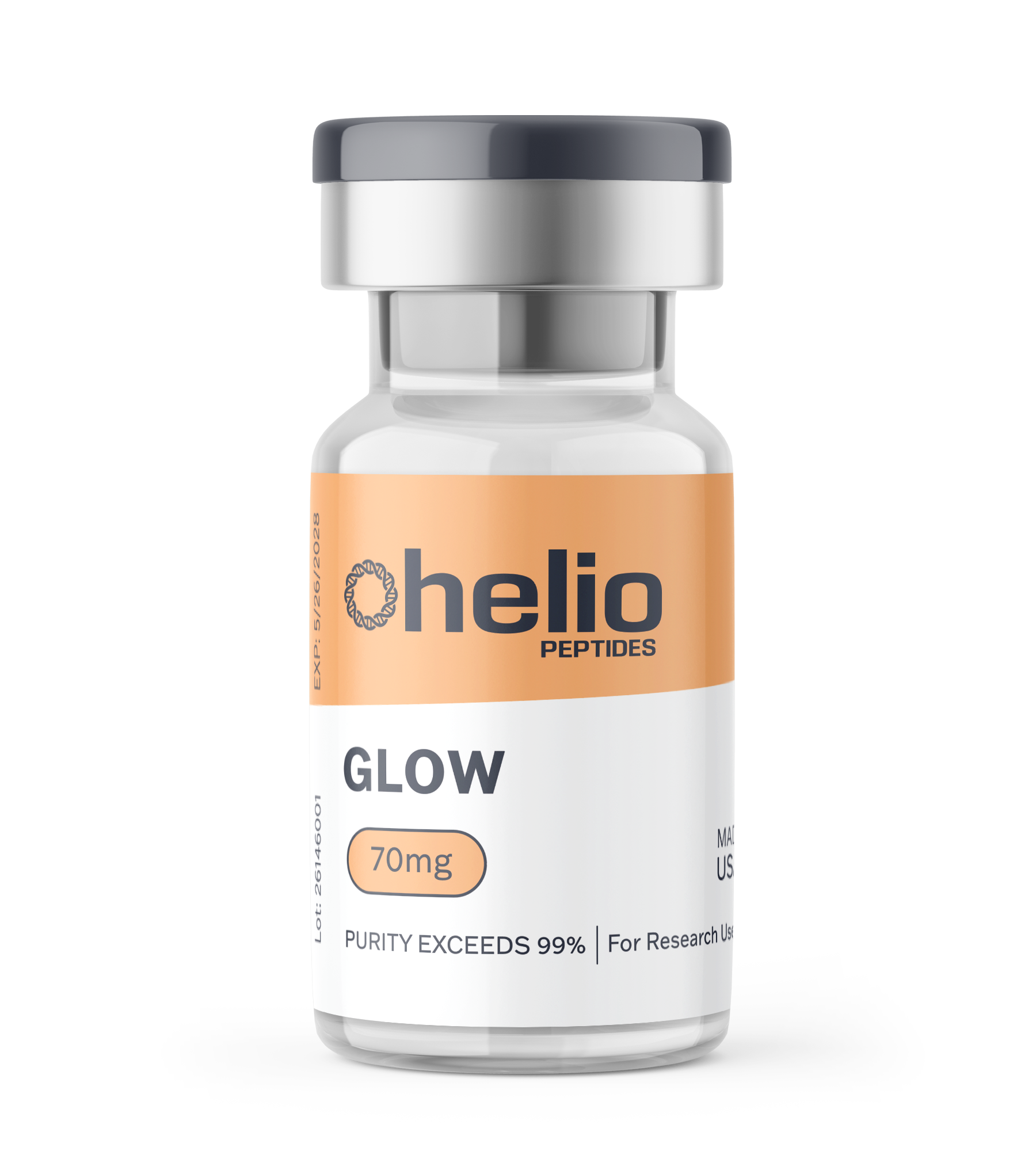
Supplied as a lyophilized powder in a 50mg vial, Helio's GHK-Cu is intended strictly for in vitro and preclinical laboratory investigation. Reported literature explores its interaction with fibroblast cultures, collagen and glycosaminoglycan expression, and copper-signaling pathways. All material is offered for Research Use Only and is not for human or veterinary use.
Gly-His-Lys (copper(II) complex)
Research use only — not for human or animal consumption. Per-batch documentation is provided with the material.
Published in vitro work reports that GHK and its copper complex can influence fibroblast behavior and the expression of extracellular-matrix components such as collagen and glycosaminoglycans. Broad gene-expression profiling studies have described GHK-Cu as modulating large numbers of genes in cultured cells, prompting continued interest as a research tool for tissue-remodeling pathways.
The copper-binding property is central to much of the reported activity, and researchers frequently study GHK-Cu as a defined-stoichiometry model for delivering copper into cellular systems. Findings are preclinical and experimental; no human efficacy conclusions are drawn.
The GHK tripeptide was first identified in the 1970s by Loren Pickart as a factor in human plasma, and its strong affinity for copper(II) led to characterization of the GHK-Cu complex. It has since become a widely referenced subject in matrix-biology and copper-signaling research.
View compound profile on NIH PubChem →
Cited literature refers to laboratory and preclinical research. GHK-Cu is supplied strictly for research use only and is not intended to diagnose, treat, cure, or prevent any disease.