Research Use Only / Third-Party Analytical Testing / Per-Batch Documentation / Materials Shipped from the USA
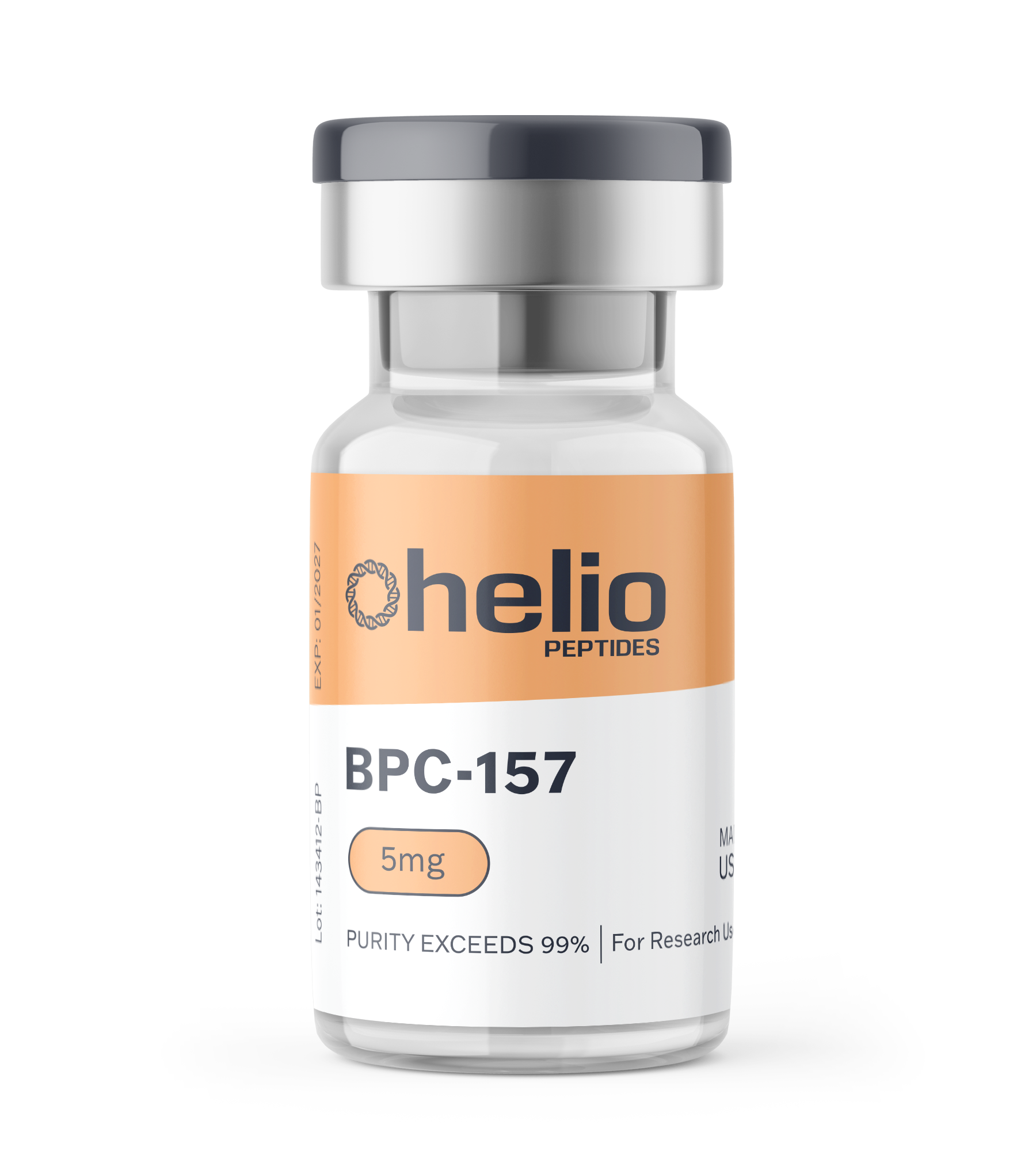
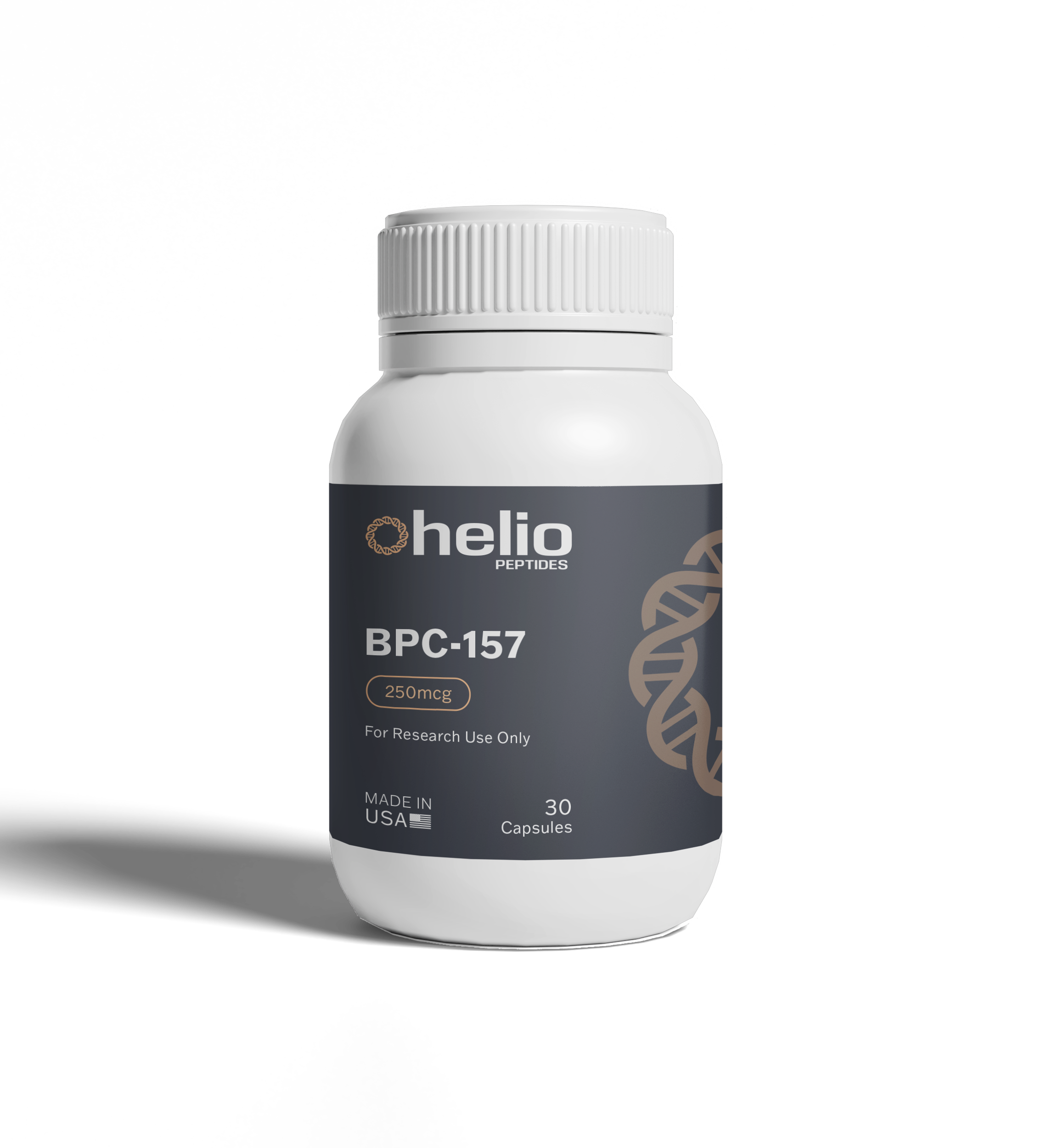
BPC-157 research material
Vial · Research materialHelio®
Recovery Research

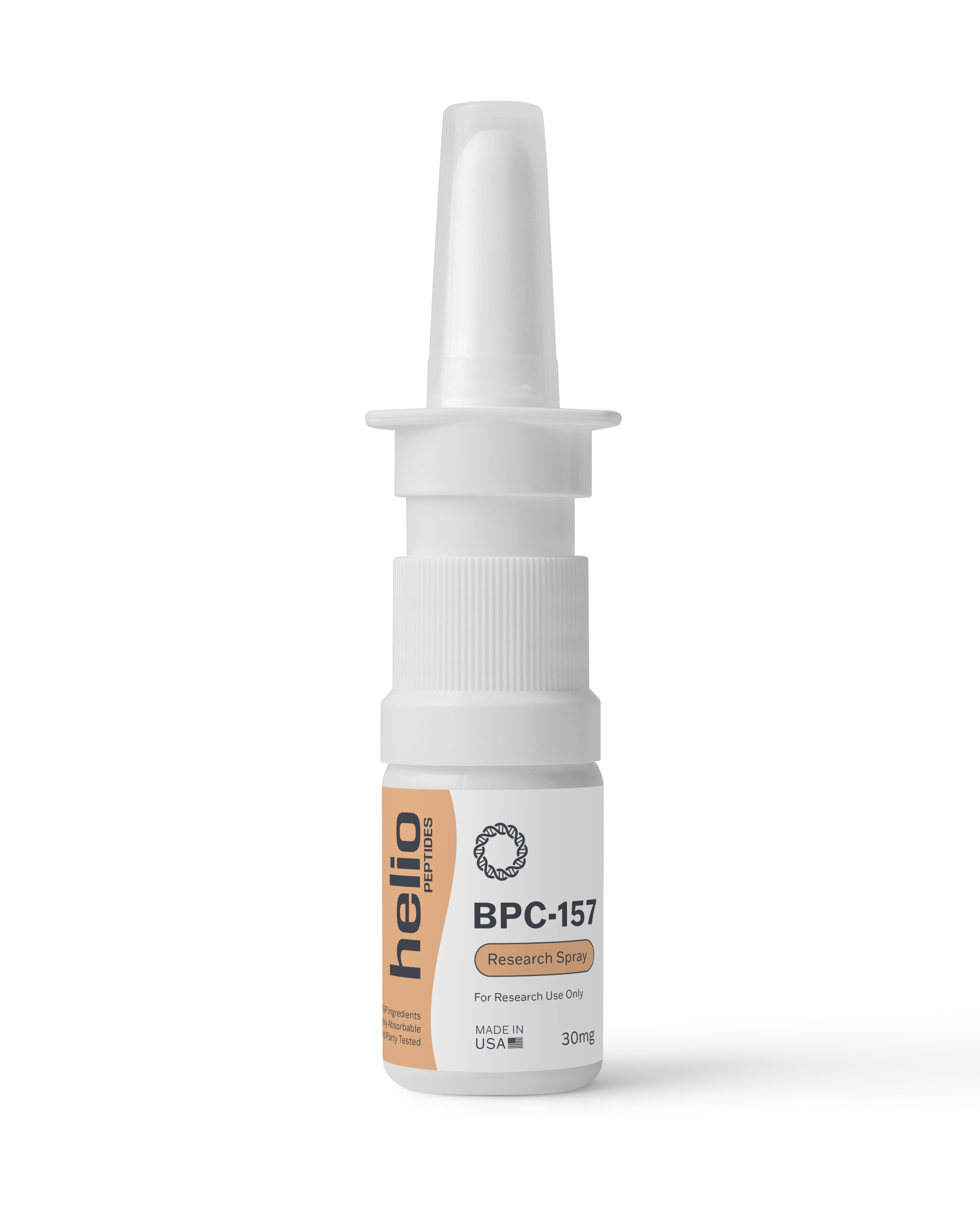
BPC-157

BPC-157 (Body Protection Compound 157) is a synthetic pentadecapeptide comprising a partial sequence of a protein originally isolated from human gastric juice. With the amino-acid sequence Gly-Glu-Pro-Pro-Pro-Gly-Lys-Pro-Ala-Asp-Asp-Ala-Gly-Leu-Val, molecular formula C62H98N16O22 and a monoisotopic-scale molecular weight of approximately 1419.5 g/mol, it is catalogued under CAS 137525-51-0 and PubChem CID 9941957. The compound is notably stable in aqueous and acidic environments relative to many peptides, a property that has made it a frequent subject in gastrointestinal and connective-tissue research.

In the peer-reviewed literature, BPC-157 has been studied extensively in rodent injury models addressing tendon, ligament, muscle, bone and mucosal repair. Proposed mechanisms center on modulation of angiogenesis (via VEGFR2 and the nitric-oxide / eNOS-Akt axis), fibroblast activity and collagen organization. Helio supplies BPC-157 as a lyophilized powder in 5 mg and 10 mg vials for laboratory research applications. This material is offered for Research Use Only and is not for human or veterinary use.

Identification
  • MaterialBPC-157
  • Research AreaRecovery
  • PresentationVial
  • Available Sizes5mg · 10mg
  • CAS Number137525-51-0
  • Molecular FormulaC62H98N16O22
  • Molecular Weight1419.5 g/mol
  • TypeSynthetic pentadecapeptide
  • Receptor / TargetNo single defined receptor; investigated via VEGFR2, nitric oxide (NO) / eNOS-Akt signaling and growth-factor pathways in preclinical models
  • PubChem CID9941957 →
Amino Acid Sequence

Gly-Glu-Pro-Pro-Pro-Gly-Lys-Pro-Ala-Asp-Asp-Ala-Gly-Leu-Val (GEPPPGKPADDAGLV)

Analytical Data
  • Purity (HPLC)≥99%
  • Identity (MS)Confirmed to specification
  • TestingAccredited (ISO 17025) third-party laboratory
  • CertificateView COA · Lot 26105001 →
From$35.95 – $39.95

Research use only — not for human or animal consumption. Per-batch documentation is provided with the material.

Key Characteristics
Molecular FormulaC62H98N16O22
Molecular Weight~1419.5 g/mol
CAS Number137525-51-0
PubChem CID9941957
StructureLinear synthetic pentadecapeptide (15 amino acids)
Receptor / TargetNo defined receptor; studied via VEGFR2 and NO/eNOS-Akt angiogenic signaling
FormLyophilized powder (vial)
SolubilitySoluble in water and bacteriostatic water; also soluble in acidic aqueous media
StorageStore lyophilized at -20°C; reconstituted material at 4°C short-term, -80°C long-term
StabilityReported stability in aqueous and gastric-acid environments; protect from light and repeated freeze-thaw
Research Context
AngiogenesisInvestigated for up-regulation of VEGF and promotion of blood-vessel formation (VEGFR2 pathway) in injury models.
Tendon & ligament repairStudied in rat Achilles and ligament transection models for effects on fibroblast outgrowth and collagen organization.
Gastrointestinal mucosaExamined in gastric ulcer, colitis and fistula models, reflecting its gastric-juice origin.
Nitric oxide signalingExplored for interaction with the NO / eNOS-Akt system and nitric-oxide-related cytoprotection.
Muscle & bone healingAssessed in crush-injury and fracture models for connective-tissue and osseous repair endpoints.
Research Findings

Preclinical work led largely by Sikiric, Seiwerth, Brcic and colleagues reports that BPC-157 accelerates healing across multiple rodent tissue-injury paradigms, with vascular and nitric-oxide pathways recurring as central mechanistic themes. Documented endpoints include enhanced angiogenesis and VEGF expression, improved tendon and ligament biomechanics, and mucosal protection in gastrointestinal models.

These observations derive from animal and in-vitro experiments; controlled human efficacy has not been established, and no receptor has been definitively identified. All data should be interpreted within an experimental, hypothesis-generating context.

History

BPC-157 was derived in the 1990s from Body Protection Compound (BPC), a peptide fraction identified in human gastric juice, and has since been characterized across an extensive series of experimental studies (also referenced as PL 14736 in earlier inflammatory-bowel research). It remains an unapproved investigational compound used strictly for laboratory research.

References
  1. Seiwerth S, Brcic L, Vuletic LB, et al. BPC 157 and blood vessels. Current Pharmaceutical Design. 2014;20(7):1121-1125.
  2. Brcic L, Brcic I, Staresinic M, et al. Modulatory effect of gastric pentadecapeptide BPC 157 on angiogenesis in muscle and tendon healing. Journal of Physiology and Pharmacology. 2009;60(Suppl 7):191-196.
  3. Sikiric P, Seiwerth S, Rucman R, et al. Stable gastric pentadecapeptide BPC 157: novel therapy in gastrointestinal tract. Current Pharmaceutical Design. 2011;17(16):1612-1632.
  4. Chang CH, Tsai WC, Lin MS, et al. The promoting effect of pentadecapeptide BPC 157 on tendon healing involves tendon outgrowth, cell survival, and cell migration. Journal of Applied Physiology. 2011;110(3):774-780.

View compound profile on NIH PubChem →

Cited literature refers to laboratory and preclinical research. BPC-157 is supplied strictly for research use only and is not intended to diagnose, treat, cure, or prevent any disease.
Why researchers choose Helio
99%+ PurityHPLC-verified every batch
Accredited TestingIndependent ISO 17025 laboratory
Per-Batch COADocumentation tied to your lot
Made in the USADiscreet, protected shipping
Related

More in Recovery

View area