
Research Use Only / Third-Party Analytical Testing / Per-Batch Documentation / Materials Shipped from the USA
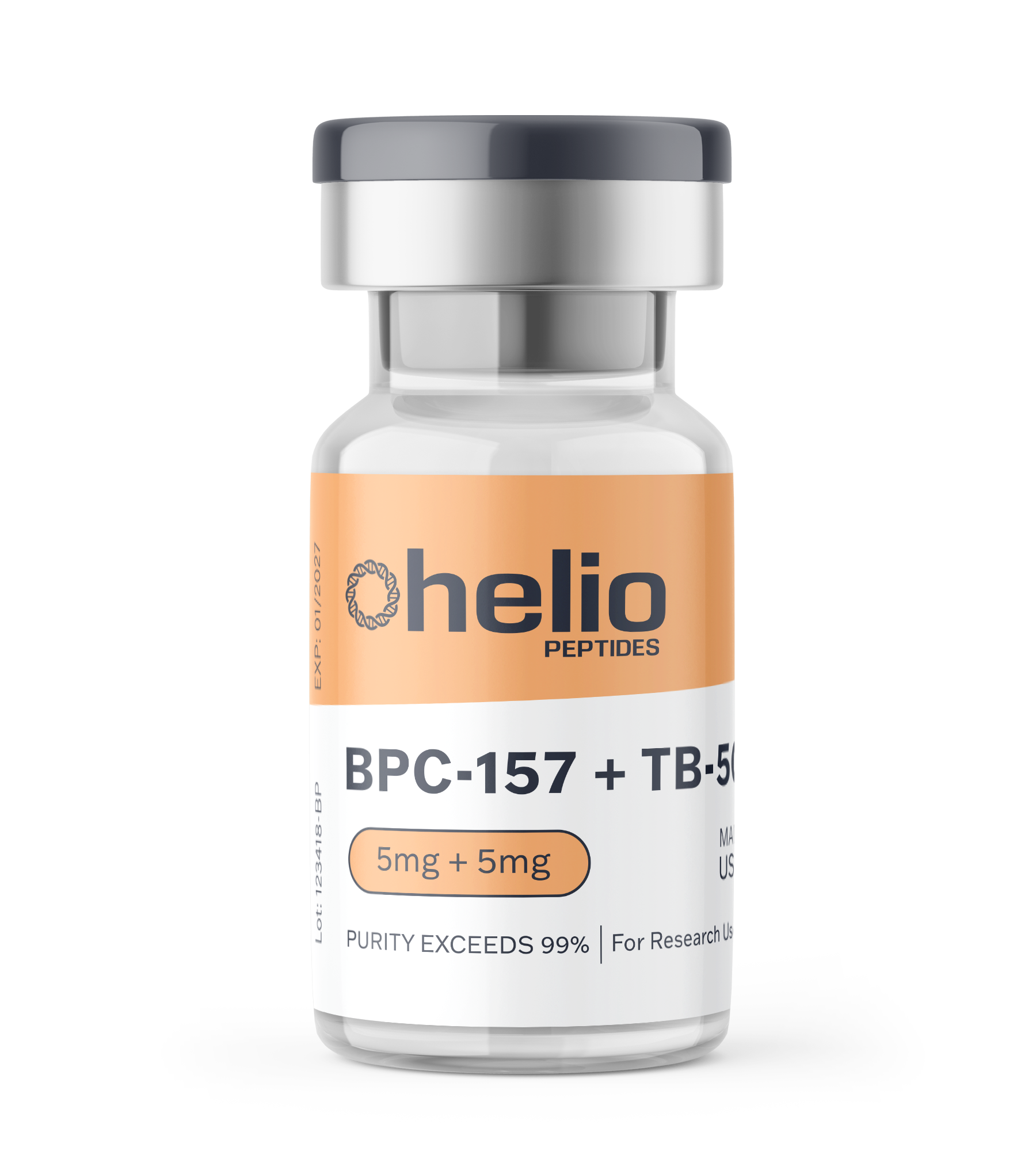
BPC-157 + TB-500 Blend research material
Vial · Research materialHelio®
Recovery Research

BPC-157 + TB-500 Blend

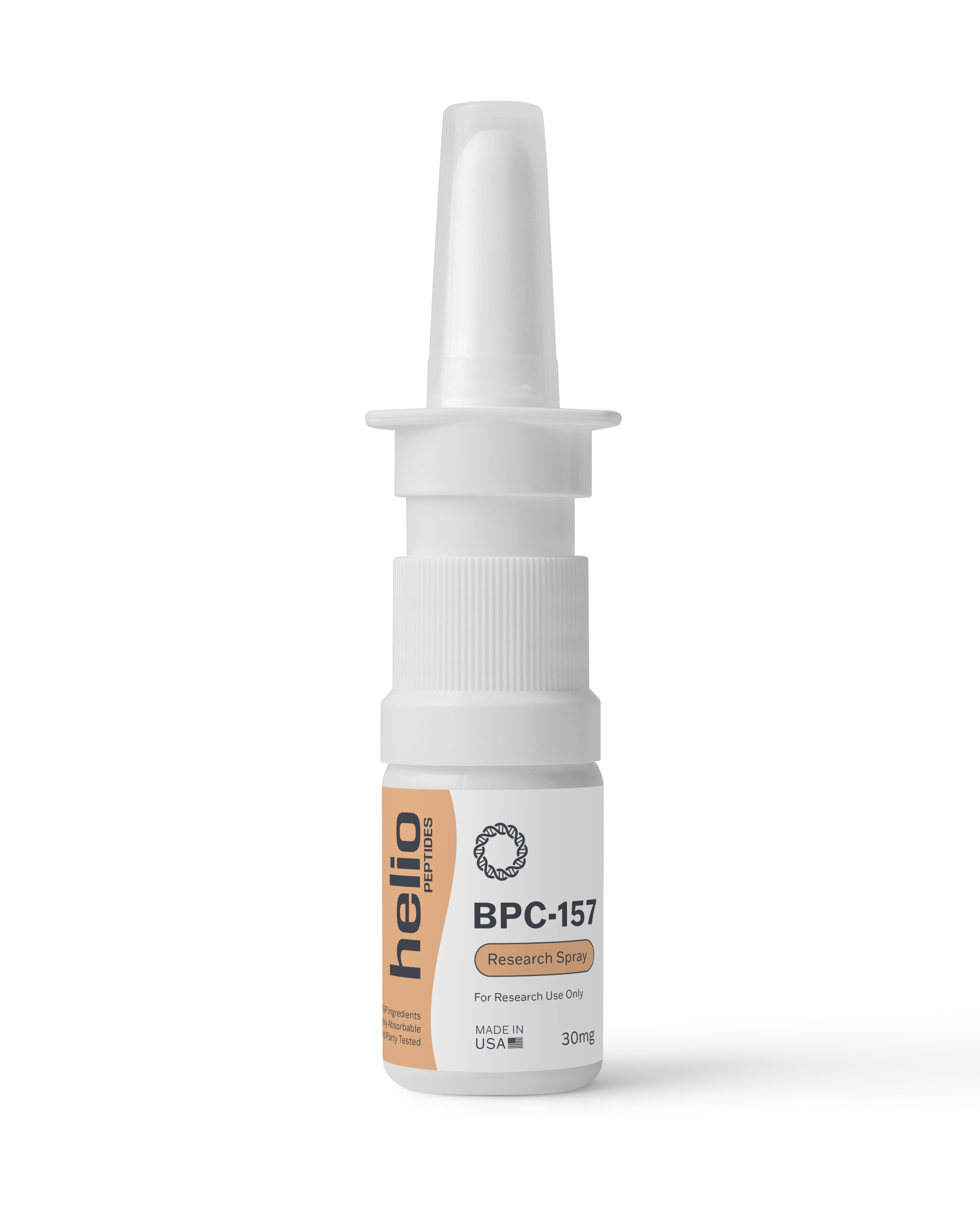
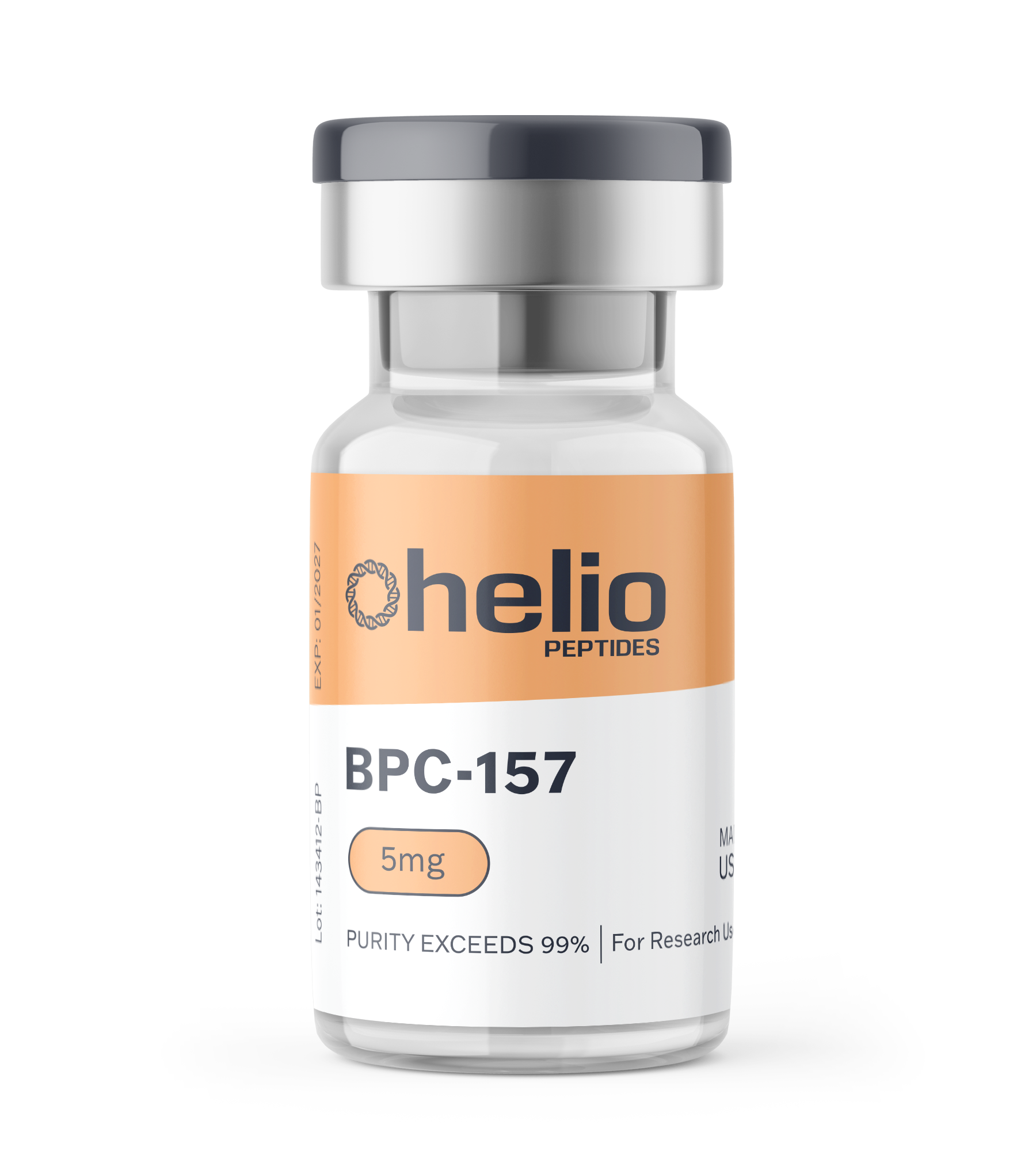
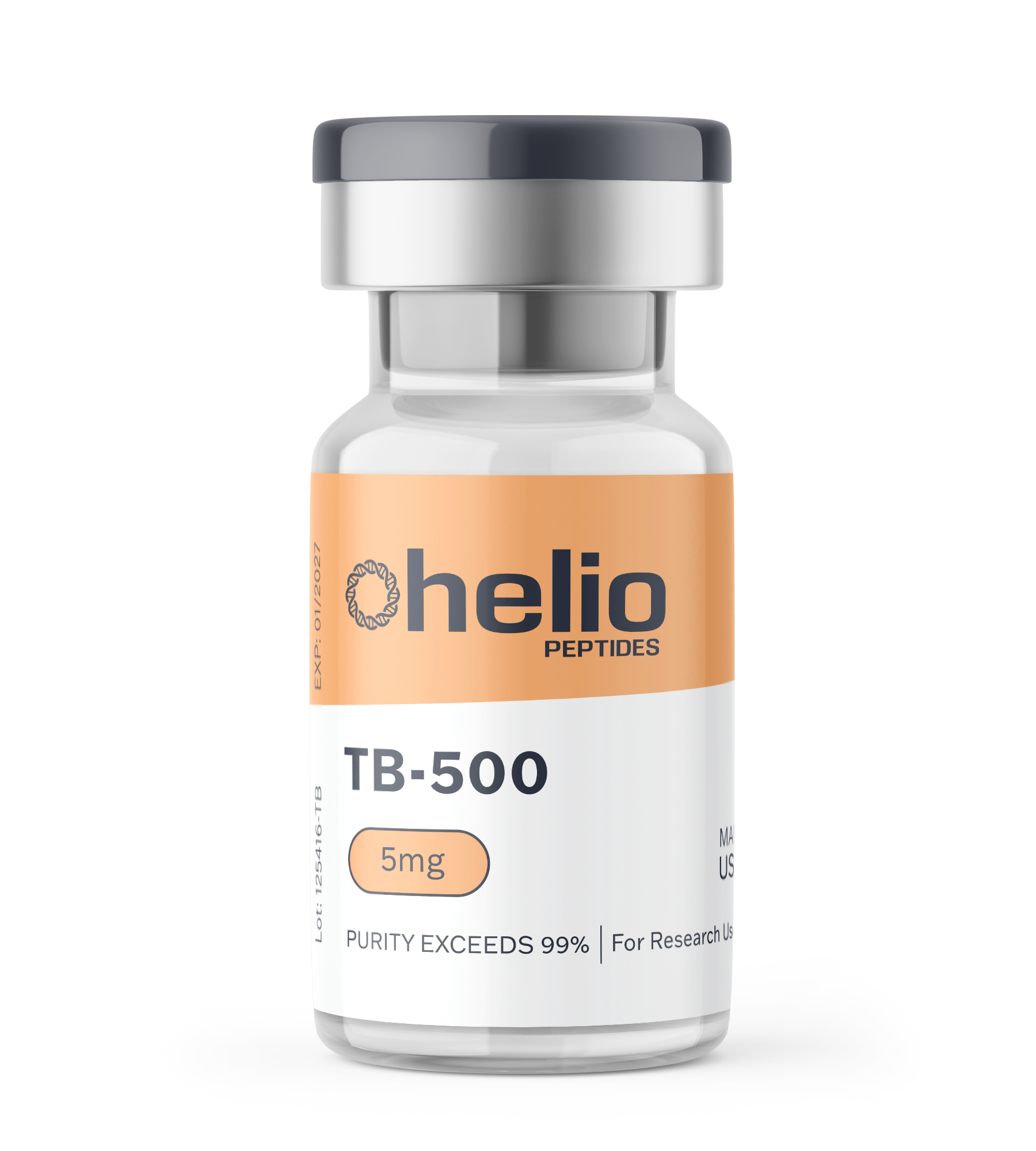
This product combines two of the most-studied recovery-research peptides, BPC-157 and TB-500 (Thymosin Beta-4), in a single lyophilized vial. BPC-157 is a synthetic pentadecapeptide (GEPPPGKPADDAGLV; C62H98N16O22; ~1419.5 g/mol; CAS 137525-51-0; PubChem CID 9941957) derived from a gastric-juice protein and studied for angiogenic and nitric-oxide-mediated tissue-repair mechanisms. TB-500 corresponds to full-length Thymosin Beta-4, a 43-residue N-acetylated peptide (C212H350N56O78S; ~4963 g/mol; CAS 77591-33-4; PubChem CID 16132341) that acts primarily by sequestering monomeric G-actin.

The two peptides are frequently paired in preclinical connective-tissue research because their proposed mechanisms are complementary: BPC-157 emphasizes vascular and nitric-oxide pathways, while TB-500 emphasizes actin-driven cell migration and cytoskeletal remodeling. Helio offers this blend in 5mg+5mg and 10mg+10mg vial configurations. This material is Research Use Only and is not for human or veterinary use.

Identification
  • MaterialBPC-157 + TB-500 Blend
  • Research AreaRecovery
  • PresentationVial
  • Available Sizes5mg + 5mg · 10mg + 10mg
  • CAS Number137525-51-0 (BPC-157); 77591-33-4 (TB-500 / Thymosin Beta-4)
  • Molecular FormulaC62H98N16O22 (BPC-157); C212H350N56O78S (TB-500)
  • Molecular Weight~1419.5 g/mol (BPC-157); ~4963.44 g/mol (TB-500)
  • TypeBlend of two synthetic peptides (pentadecapeptide + 43-residue Thymosin Beta-4)
  • Receptor / TargetBPC-157: VEGFR2 / NO-eNOS-Akt signaling (no defined receptor); TB-500: G-actin sequestration
Amino Acid Sequence

BPC-157: GEPPPGKPADDAGLV (15 aa); TB-500: Ac-SDKPDMAEIEKFDKSKLKKTETQEKNPLPSKETIEQEKQAGES (43 aa)

Analytical Data
  • Purity (HPLC)≥99%
  • Identity (MS)Confirmed to specification
  • TestingAccredited (ISO 17025) third-party laboratory
  • CertificateView COA · Lot 26146002 →
From$99.95 – $109.95

Research use only — not for human or animal consumption. Per-batch documentation is provided with the material.

Component Profiles

BPC-157

  • FormulaC62H98N16O22
  • Weight~1419.5 g/mol
  • CAS137525-51-0
  • StructureSynthetic pentadecapeptide (15 aa), GEPPPGKPADDAGLV
  • ReceptorNo defined receptor; VEGFR2 and NO / eNOS-Akt angiogenic signaling

TB-500 (Thymosin Beta-4)

  • FormulaC212H350N56O78S
  • Weight~4963.44 g/mol
  • CAS77591-33-4
  • StructureN-acetylated 43-residue peptide (full-length Thymosin Beta-4)
  • ReceptorMonomeric G-actin (actin sequestration); angiogenic actin-binding motif
Key Characteristics
Molecular FormulaC62H98N16O22 (BPC-157) + C212H350N56O78S (TB-500)
Molecular Weight~1419.5 g/mol (BPC-157); ~4963.44 g/mol (TB-500)
CAS Number137525-51-0 (BPC-157); 77591-33-4 (TB-500)
PubChem CID9941957 (BPC-157); 16132341 (TB-500)
StructureTwo linear synthetic peptides co-formulated (15 aa + 43 aa)
Receptor / TargetBPC-157: VEGFR2/NO-eNOS-Akt; TB-500: G-actin sequestration
FormLyophilized powder blend (vial)
SolubilityBoth peptides soluble in water and bacteriostatic water
StorageStore lyophilized at -20°C; reconstituted at 4°C short-term, -80°C long-term
StabilityStable as lyophilized powder; protect from light and minimize freeze-thaw in solution
Research Context
AngiogenesisBoth peptides are studied for pro-angiogenic effects, BPC-157 via VEGFR2 and TB-500 via its actin-binding motif.
Connective-tissue repairPaired in tendon, ligament and muscle injury research for complementary repair endpoints.
Cell migrationTB-500 promotes actin-driven migration of fibroblasts and endothelial cells.
Nitric oxide signalingBPC-157 contributes NO / eNOS-Akt-related cytoprotective effects.
Wound healingCombined use is explored in dermal and soft-tissue repair models.
Research Findings

The BPC-157 / TB-500 pairing is a common preclinical combination in recovery research because the two peptides target distinct but complementary processes, vascular and nitric-oxide signaling for BPC-157 and actin-cytoskeleton regulation and cell migration for TB-500. Individual-compound studies (Sikiric et al. for BPC-157; Malinda et al. and Goldstein et al. for Thymosin Beta-4) document angiogenic and tissue-repair endpoints in rodent and in-vitro models.

No controlled study establishes synergy or human efficacy of the blend itself; the two peptides are simply co-formulated for research convenience. All associated data are experimental and hypothesis-generating.

History

BPC-157 (from gastric-juice Body Protection Compound, 1990s) and Thymosin Beta-4 (isolated from thymus, characterized since the 1980s) each have independent experimental histories; their combination as a research blend reflects their shared use in connective-tissue and wound-repair studies. Both remain unapproved investigational compounds for laboratory research only.

References
  1. Seiwerth S, Brcic L, Vuletic LB, et al. BPC 157 and blood vessels. Current Pharmaceutical Design. 2014;20(7):1121-1125.
  2. Sikiric P, Seiwerth S, Rucman R, et al. Stable gastric pentadecapeptide BPC 157: novel therapy in gastrointestinal tract. Current Pharmaceutical Design. 2011;17(16):1612-1632.
  3. Malinda KM, Sidhu GS, Mani H, et al. Thymosin beta4 accelerates wound healing. Journal of Investigative Dermatology. 1999;113(3):364-368.
  4. Goldstein AL, Hannappel E, Kleinman HK. Thymosin beta4: actin-sequestering protein moonlights to repair injured tissues. Trends in Molecular Medicine. 2005;11(9):421-429.

Cited literature refers to laboratory and preclinical research. BPC-157 + TB-500 Blend is supplied strictly for research use only and is not intended to diagnose, treat, cure, or prevent any disease.
Why researchers choose Helio
99%+ PurityHPLC-verified every batch
Accredited TestingIndependent ISO 17025 laboratory
Per-Batch COADocumentation tied to your lot
Made in the USADiscreet, protected shipping
Related

More in Recovery

View area