Research Use Only / Third-Party Analytical Testing / Per-Batch Documentation / Materials Shipped from the USA
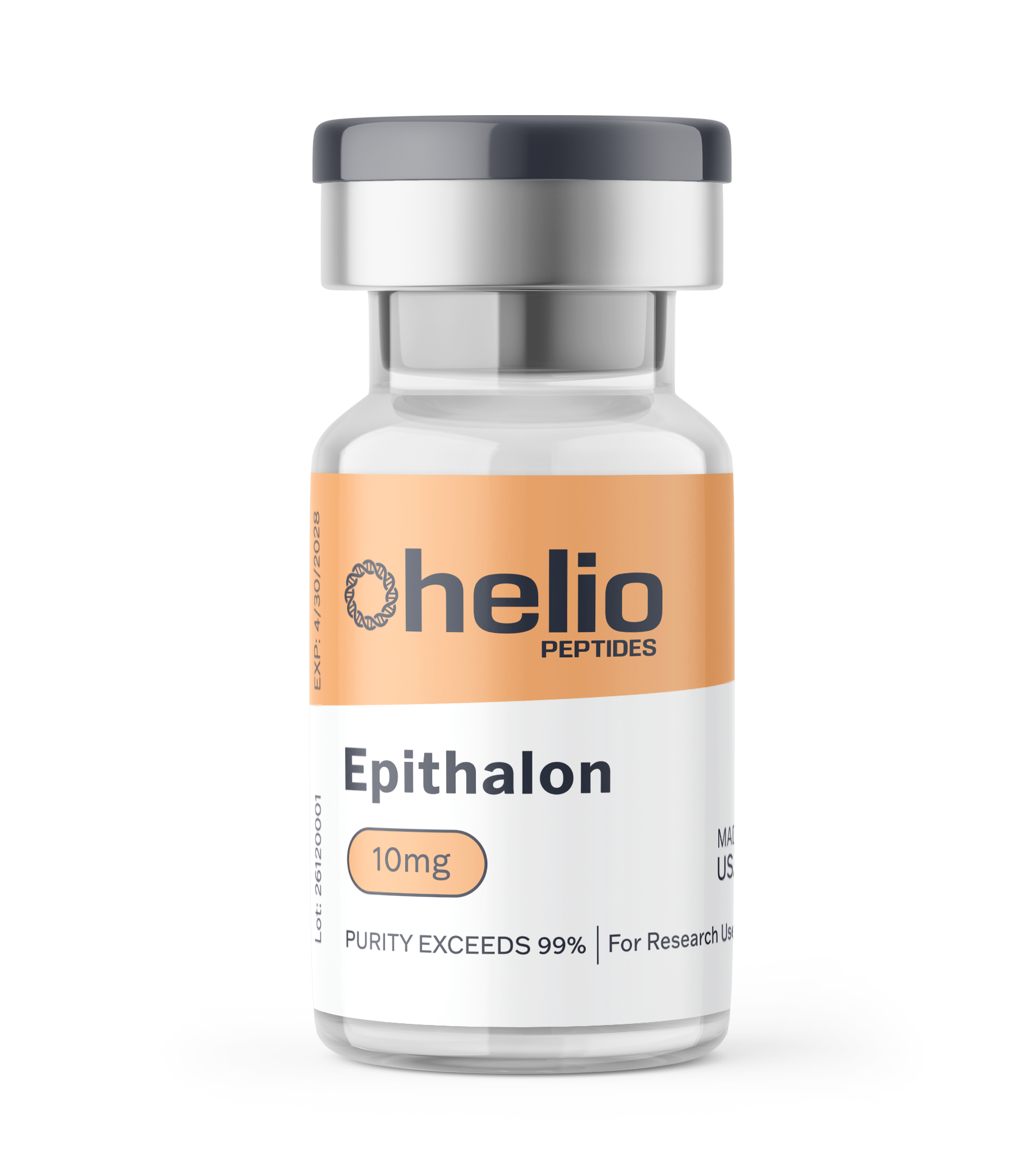
Epithalon research material
Vial · Research materialHelio®
Longevity Research

Epithalon

Epithalon (also written Epitalon; sequence Ala-Glu-Asp-Gly, abbreviated AEDG) is a synthetic tetrapeptide developed as the short-chain analogue of the pineal polypeptide preparation Epithalamin. First synthesized in the laboratory of Vladimir Khavinson, it has become a widely referenced model compound in gerontological and telomere-biology research. With a molecular formula of C14H22N4O9 and a molecular weight of 390.35 g/mol, Epithalon is one of the smallest peptides studied in the context of cellular senescence and pineal regulation.

Research literature on Epithalon centers on its reported influence over telomerase activity in cultured somatic cells, its interactions with chromatin and specific gene-promoter regions, and its proposed role in circadian and neuroendocrine signaling associated with the pineal gland. These investigations position AEDG as a peptide bioregulator model, though the precise molecular targets and mechanisms remain an active subject of study. This material is supplied strictly for laboratory research use.

Identification
  • MaterialEpithalon
  • Research AreaLongevity
  • PresentationVial
  • Available Sizes10mg
  • CAS Number307297-39-8
  • Molecular FormulaC14H22N4O9
  • Molecular Weight390.35 g/mol
  • TypeSynthetic tetrapeptide
  • Receptor / TargetProposed telomerase / gene-expression and pineal-peptide signaling (target not fully defined)
  • PubChem CID219042 →
Amino Acid Sequence

Ala-Glu-Asp-Gly

Analytical Data
  • Purity (HPLC)≥99%
  • Identity (MS)Confirmed to specification
  • TestingAccredited (ISO 17025) third-party laboratory
  • DocumentationPer-batch COA →
From$29.95

Research use only — not for human or animal consumption. Per-batch documentation is provided with the material.

Key Characteristics
Molecular FormulaC14H22N4O9
Molecular Weight390.35 g/mol
CAS Number307297-39-8
PubChem CID219042
SequenceAla-Glu-Asp-Gly (AEDG)
Receptor / TargetProposed telomerase / pineal-peptide and gene-expression signaling
FormLyophilized powder (10mg vial)
SolubilitySoluble in water and bacteriostatic water
StorageStore lyophilized cold and protected from light; -20°C to -80°C for long-term storage
StabilityLyophilized form stable at room temperature short-term; reconstituted material refrigerated at 4°C
Research Context
Telomere biologyStudied for reported effects on telomerase activity and telomere elongation in cultured human somatic cell lines.
Cellular senescence & agingUsed as a model peptide bioregulator in in vitro and animal models of aging and replicative senescence.
Pineal / neuroendocrine signalingInvestigated as an Epithalamin-derived analogue in research on melatonin rhythms and pineal function.
Gene expressionExamined for proposed interactions with chromatin and specific gene-promoter regions influencing transcriptional activity.
Oxidative stressExplored in models of free-radical and antioxidant-system regulation associated with cellular aging.
Research Findings

Published research on Epithalon has reported activation of telomerase and elongation of telomeres in cultured human fibroblast and somatic cell populations, alongside observations of altered gene-promoter binding and modulation of melatonin-associated rhythms in animal models. The peptide is frequently framed within the concept of "peptide bioregulation," in which short peptides are proposed to influence tissue-specific gene expression.

These reports are drawn largely from in vitro systems and rodent studies; mechanisms remain incompletely characterized and results are not established for humans. Epithalon is offered solely as a research reagent.

History

Epithalon was designed as the tetrapeptide analogue of Epithalamin, a peptide extract of the pineal gland studied in the Soviet Union and Russia beginning in the 1980s. Its synthesis and much of the foundational research are attributed to Russian gerontologist Vladimir Khavinson and colleagues at the St. Petersburg Institute of Bioregulation and Gerontology, who advanced the broader "peptide bioregulator" framework.

References
  1. Khavinson VK, et al. Epithalon peptide induces telomerase activity and telomere elongation in human somatic cells. Bull Exp Biol Med. 2003;135(6):590-592.
  2. Khavinson VKh, Bondarev IE, Butyugov AA. Epithalon peptide increases the lifespan of Drosophila melanogaster. Bull Exp Biol Med. 2000;130(12):1105-1107.
  3. Anisimov VN, et al. Effect of Epitalon on biomarkers of aging, life span and spontaneous tumor incidence in mice. Biogerontology. 2003;4(4):193-202.
  4. PubChem Compound Summary for CID 219042, Epitalon. National Center for Biotechnology Information.

View compound profile on NIH PubChem →

Cited literature refers to laboratory and preclinical research. Epithalon is supplied strictly for research use only and is not intended to diagnose, treat, cure, or prevent any disease.
Why researchers choose Helio
99%+ PurityHPLC-verified every batch
Accredited TestingIndependent ISO 17025 laboratory
Per-Batch COADocumentation tied to your lot
Made in the USADiscreet, protected shipping
Related

More in Longevity

View area