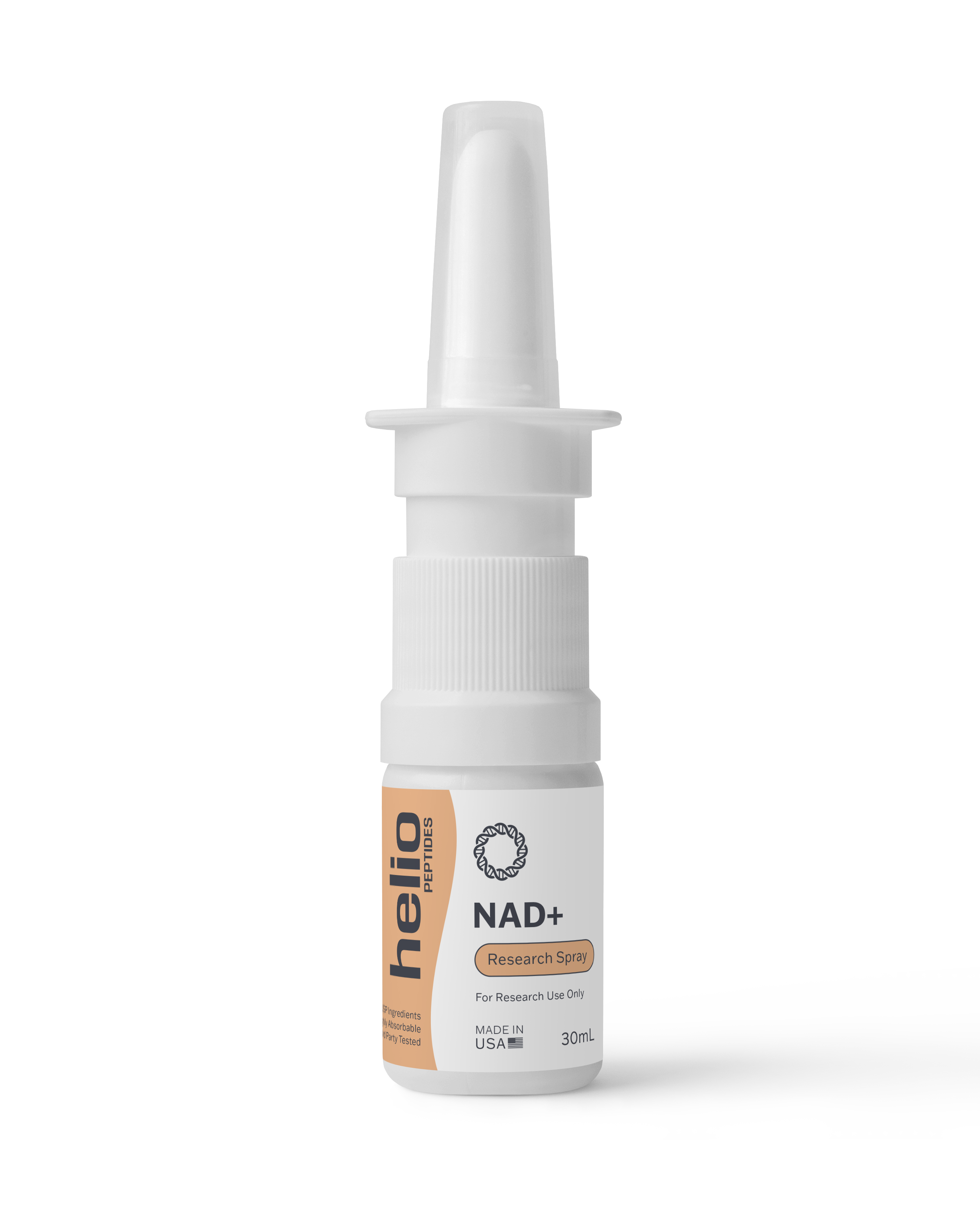
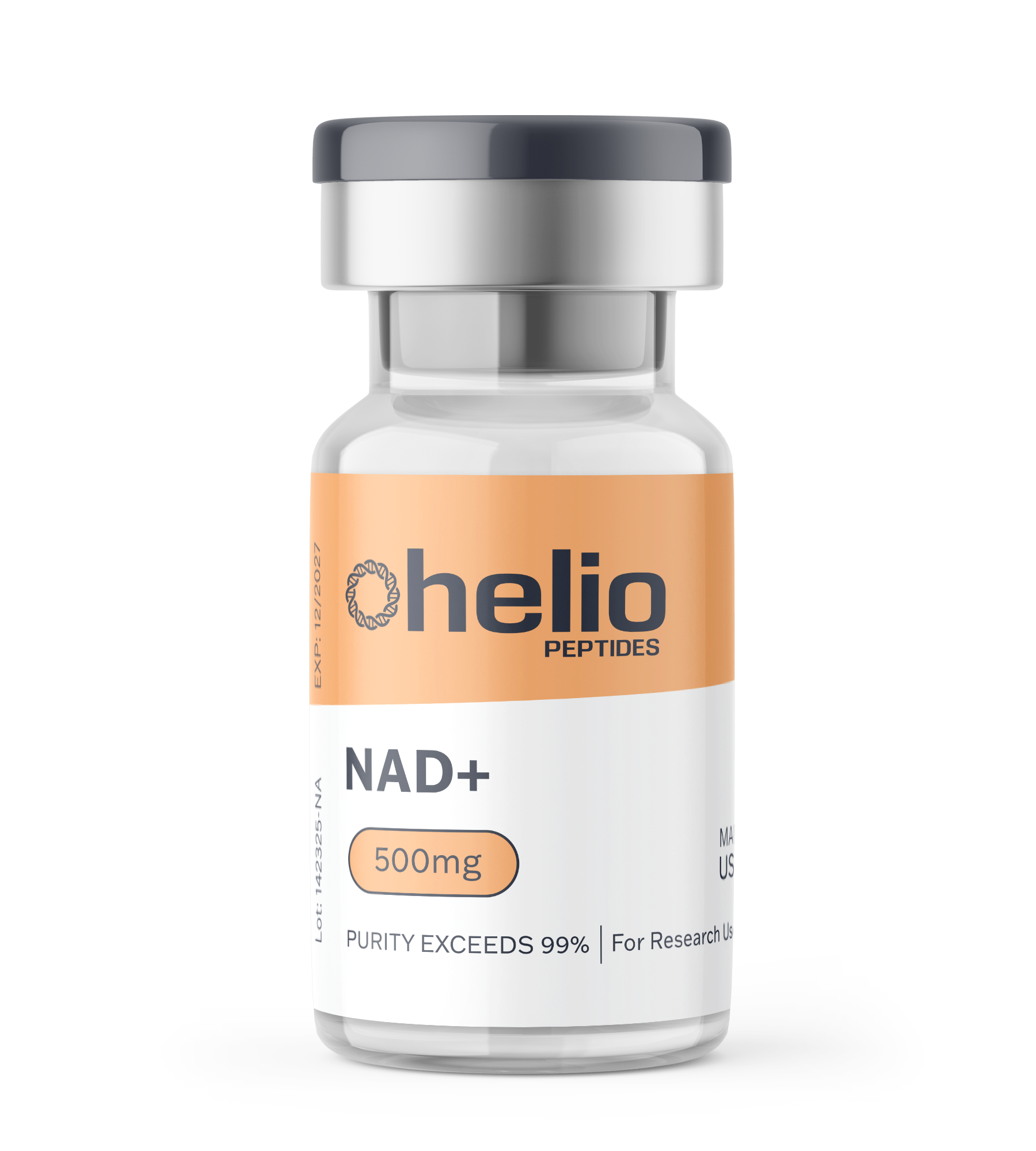
NAD+ (beta-nicotinamide adenine dinucleotide, oxidized form) is a dinucleotide coenzyme central to cellular energy metabolism and redox chemistry. Formed from a nicotinamide mononucleotide joined to an adenine nucleotide by a pyrophosphate bridge, it has the molecular formula C21H27N7O14P2 and a molecular weight of 663.43 g/mol (CAS 53-84-9). It is a small molecule rather than a peptide and carries no amino-acid sequence.
NAD+ cycles between its oxidized (NAD+) and reduced (NADH) states, serving as the primary electron carrier in glycolysis, the citric acid cycle, and oxidative phosphorylation. Beyond redox chemistry, NAD+ is a consumed substrate for sirtuins, poly(ADP-ribose) polymerases (PARPs), and CD38, linking it to research on aging, DNA repair, and metabolic signaling. This 500mg vial is supplied for laboratory research use only.
Research use only — not for human or animal consumption. Per-batch documentation is provided with the material.
Research on NAD+ spans its indispensable role as an electron carrier in energy metabolism and its function as a consumed cosubstrate for the sirtuin, PARP, and CD38 enzyme families. Declining tissue NAD+ levels with age and their restoration in preclinical models have made NAD+ metabolism a prominent theme in longevity and metabolic research.
Reported effects are drawn from biochemical, cell-culture, and animal studies; NAD+ biology is complex and context-dependent, and results are not established for human therapeutic use. This material is offered strictly as a research reagent.
NAD+ was first described by Arthur Harden and William Young in 1906 as a heat-stable "cozymase" factor required for fermentation, and its structure and redox role were elucidated over subsequent decades by Otto Warburg, Hans von Euler-Chelpin, and others. Renewed interest since the 2000s has centered on NAD+-consuming enzymes such as sirtuins and PARPs and their links to aging and metabolism.
View compound profile on NIH PubChem →
Cited literature refers to laboratory and preclinical research. NAD+ is supplied strictly for research use only and is not intended to diagnose, treat, cure, or prevent any disease.